Your Cart is Empty















Seat Height & Table Fit
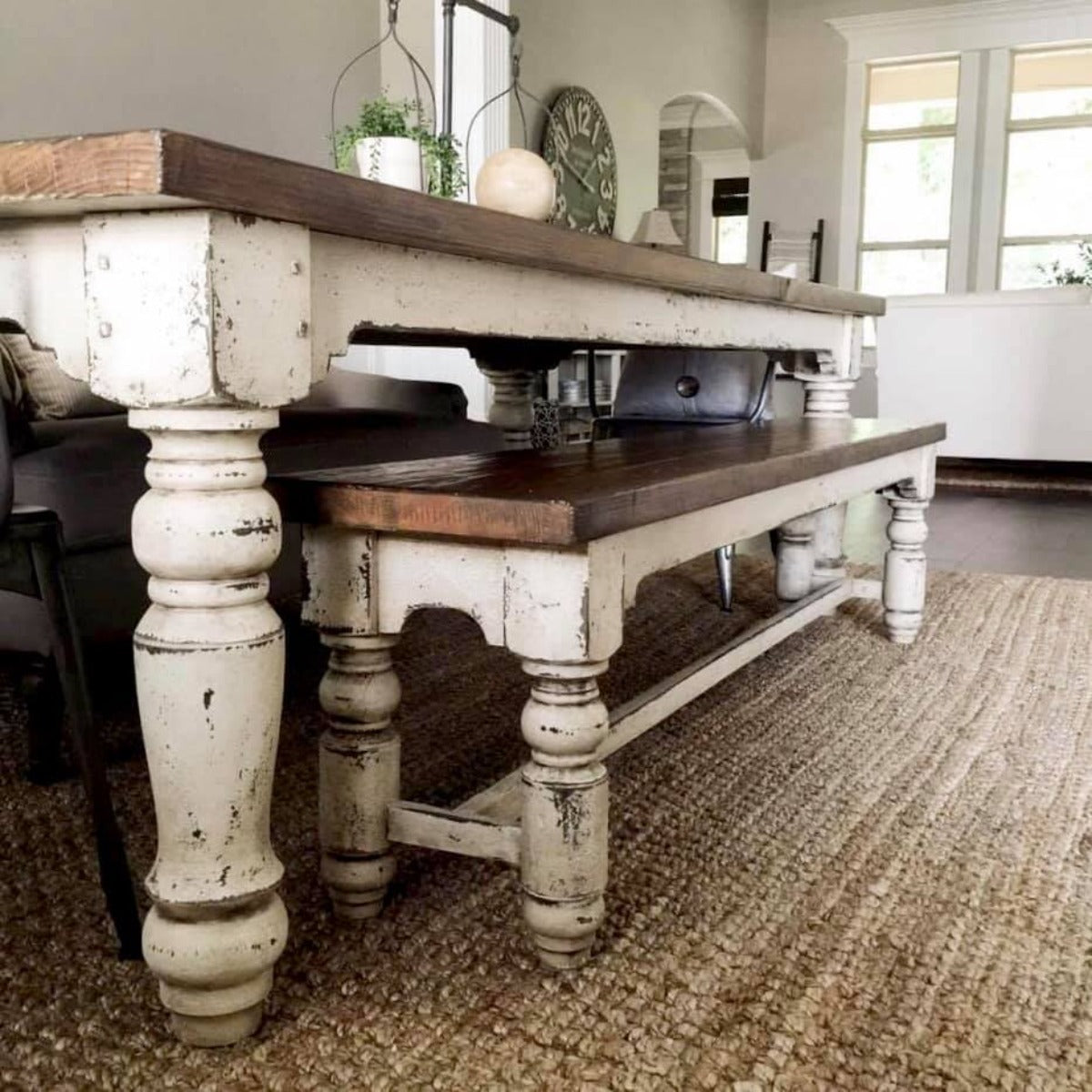
For dining use, compare the occupied seat height with the underside of the tabletop, apron or lowest obstruction. Also check table legs, trestles and pedestals before planning the number of seats.


Benches
A well-placed bench makes a room more useful without asking for much visual space. It can welcome guests in an entryway, draw more people to the dining table or add a comfortable finishing touch at the foot of a bed.
Our collection brings together handcrafted iron, warm wood, live-edge teak and richly patterned hooked upholstery—from relaxed dining and farm benches to decorative accent seating with a story of its own.
Before ordering: compare the complete width and depth, seat height, back and arm height, materials, indoor or outdoor suitability, assembly, delivery method and return eligibility shown on the individual product page.
The Seat That Makes Room for More
A bench can solve several needs without making a room feel crowded. It can soften a long hallway, create a landing place near the front door, balance the foot of a bed or provide relaxed seating along one side of a dining table.
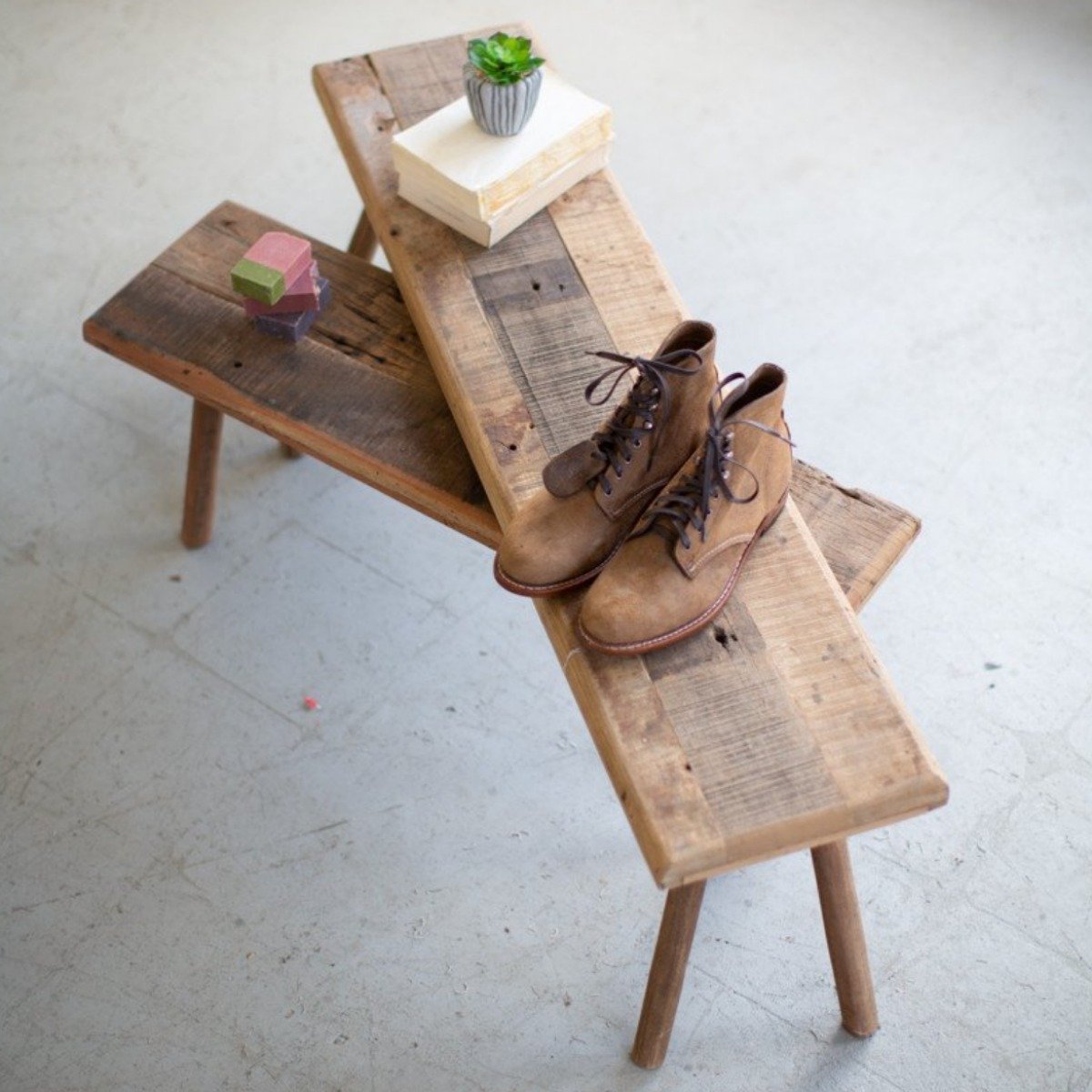
Backless designs keep sight lines open and tuck away easily, while backed benches offer support and a stronger silhouette. Hooked, forged and handcrafted wood designs allow the bench to add character as well as another useful place to sit.
Measure for the Way It Will Be Used
Begin with the intended placement, then compare the complete product dimensions with the table, bed, wall, doorway and walkways nearby.
For dining use, compare the occupied seat height with the underside of the tabletop, apron or lowest obstruction. Also check table legs, trestles and pedestals before planning the number of seats.
Mark the full footprint on the floor. Include room for people to sit, stand and move around the bench without blocking doors, drawers or the natural path through the room.
A backless bench feels visually lighter and may tuck beneath a table. Backs and arms add support and presence, while upholstered or hooked tops offer a softer seat and introduce color or pattern.
Bench Planning Checklist
Record the complete width, depth and height, then check seat height, door swings, baseboards, nearby furniture, walking space and the full delivery path into the room.
Material Changes the Mood
The material, construction and finish determine how the bench feels in the room, how it should be cared for and where it can be used.
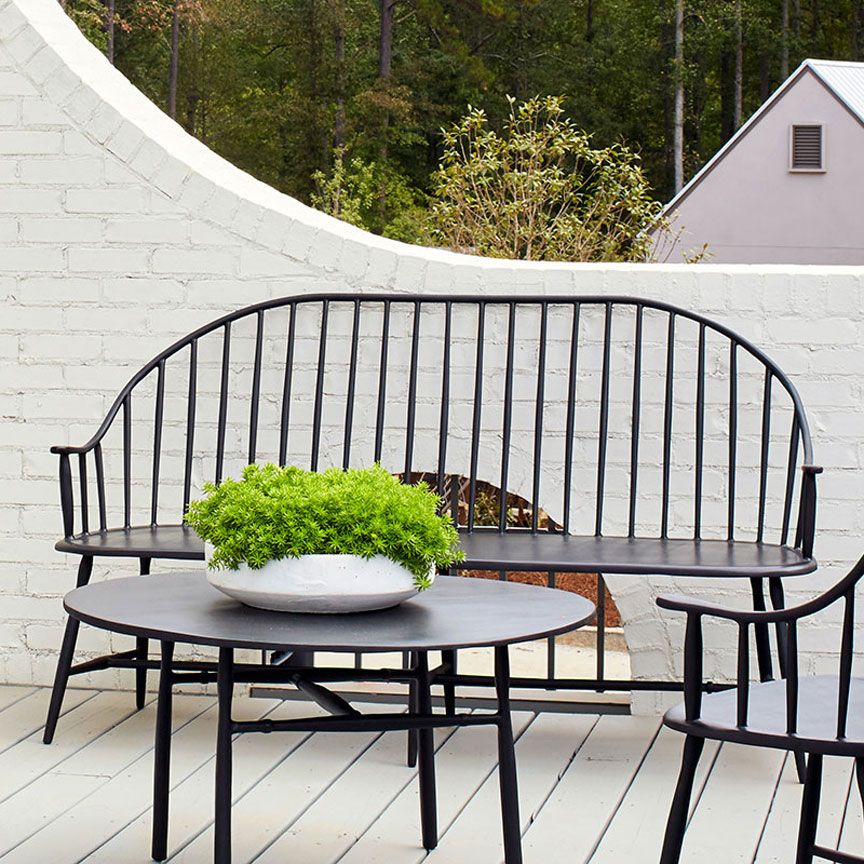
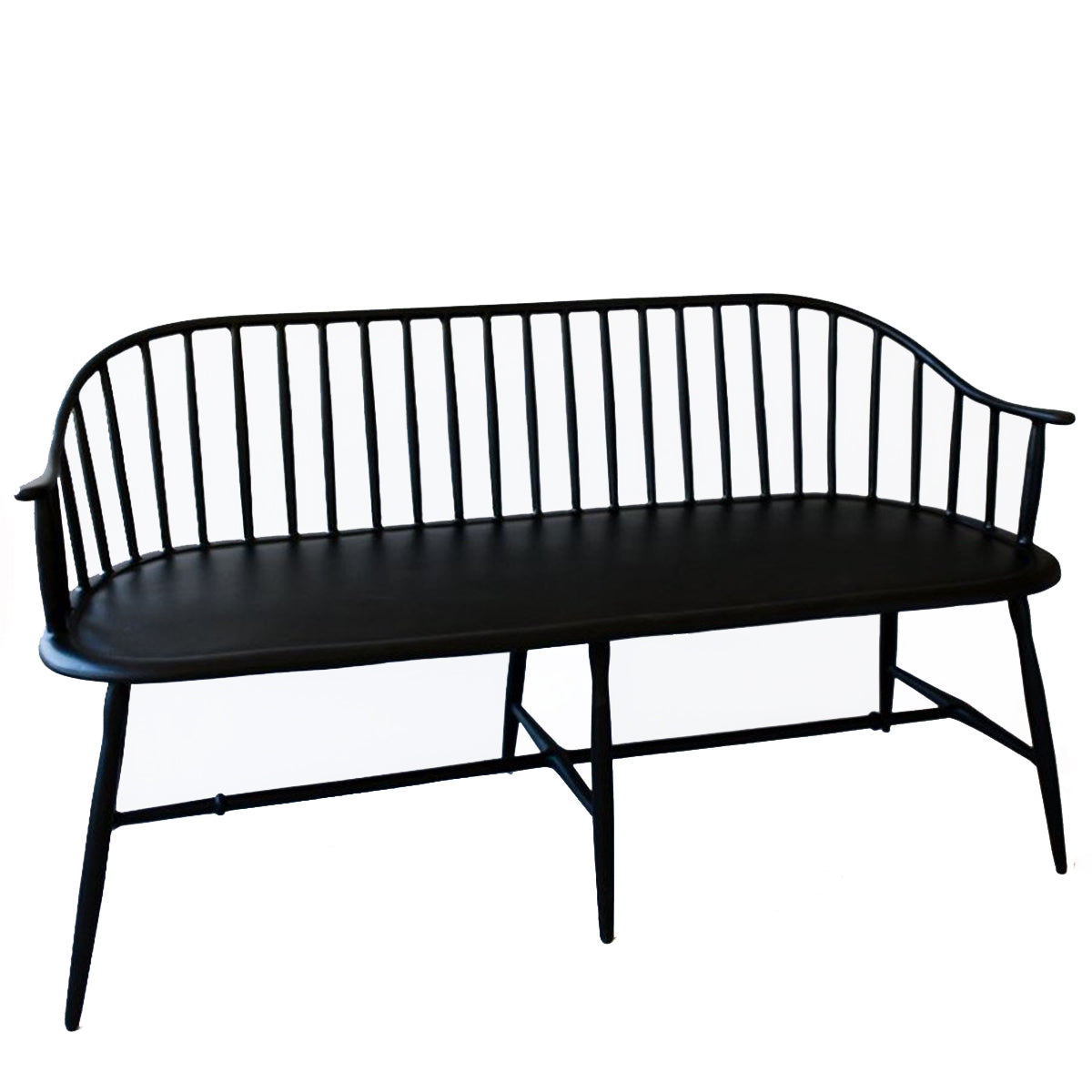
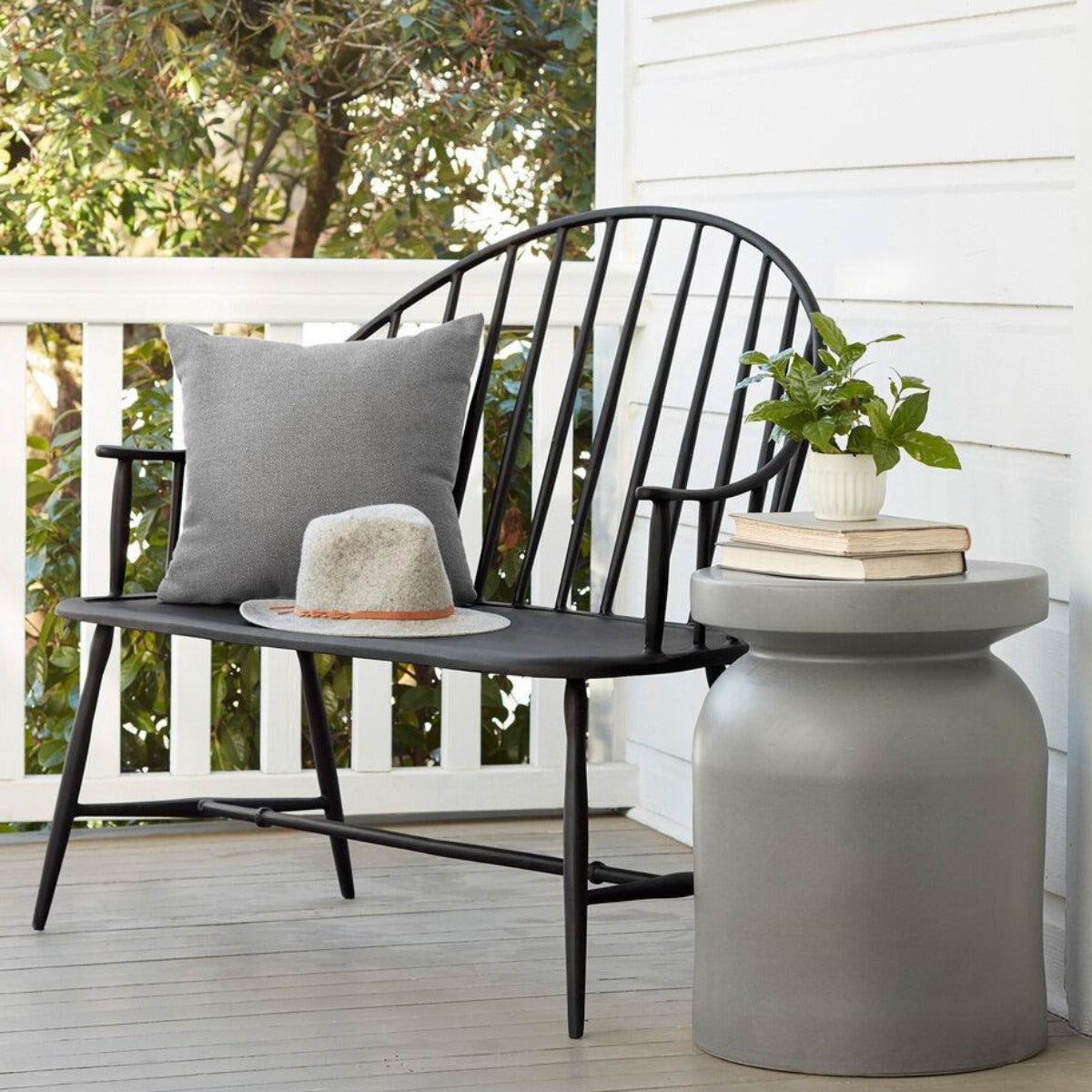
Iron and metal frames bring structure, open line and sculptural detail. Some are designed for interiors, while others are finished for porches, patios or garden settings.
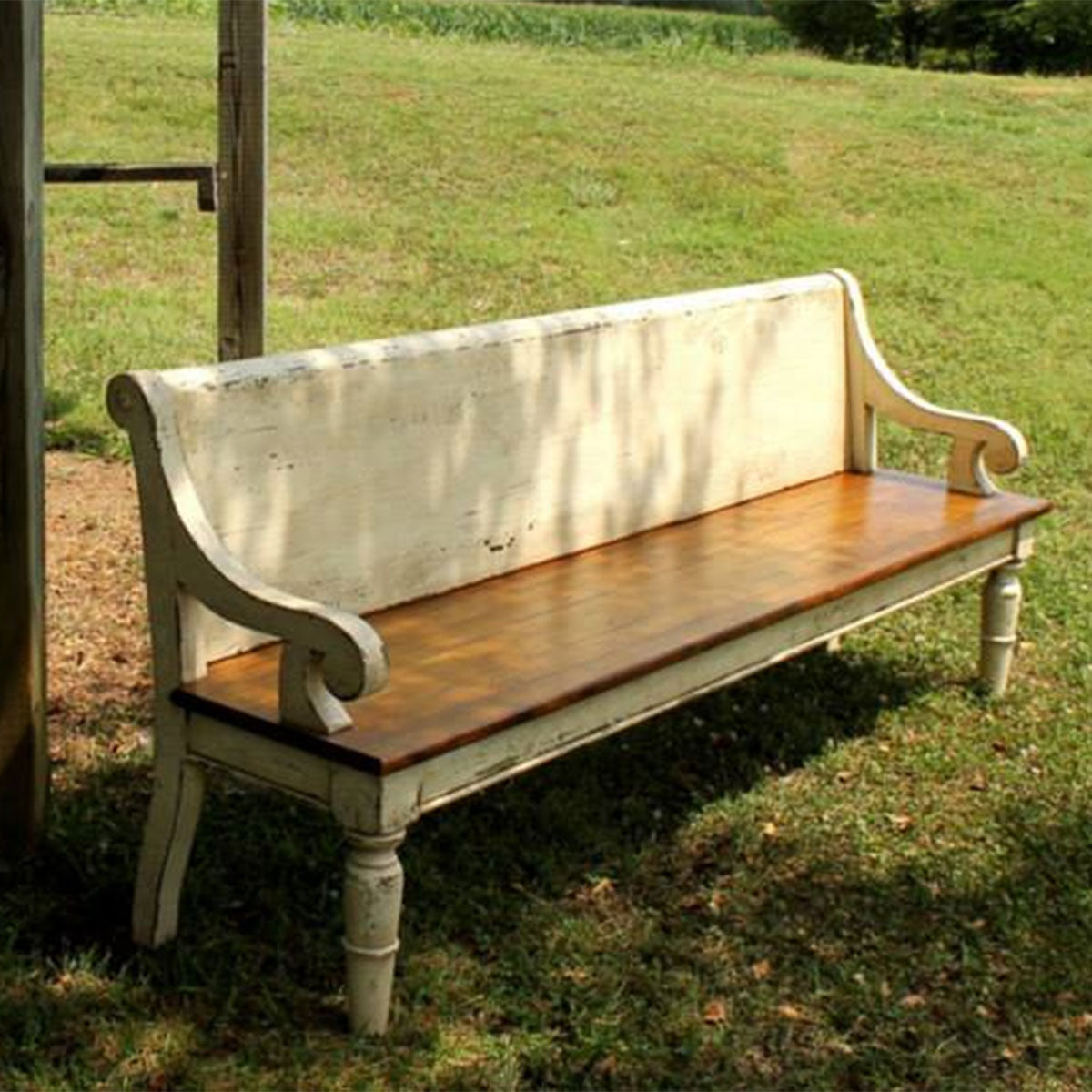
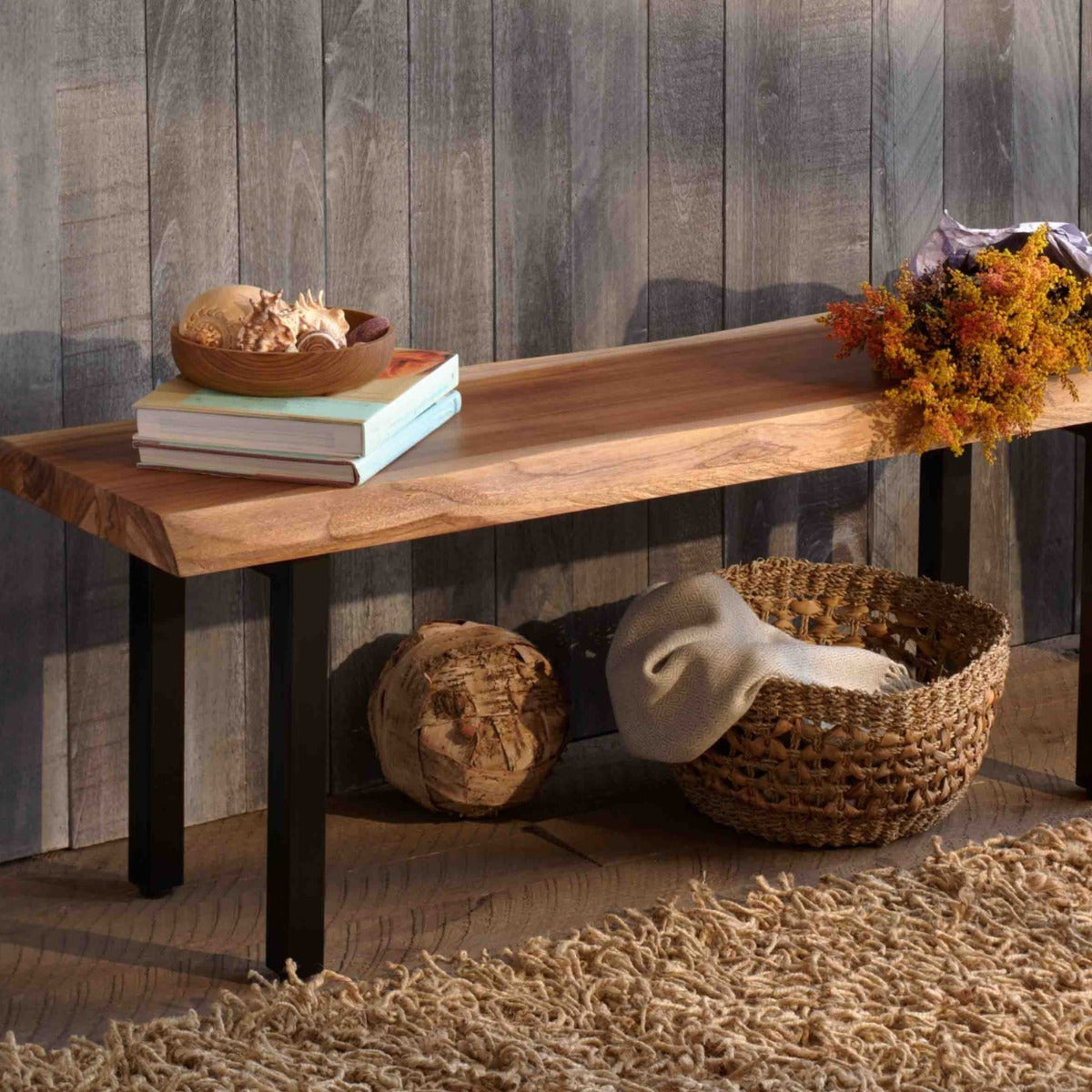
Wood adds natural grain and warmth, from simple farm benches to substantial deacon’s benches and organic live-edge seating. Expect variations where natural materials and hand finishing are used.
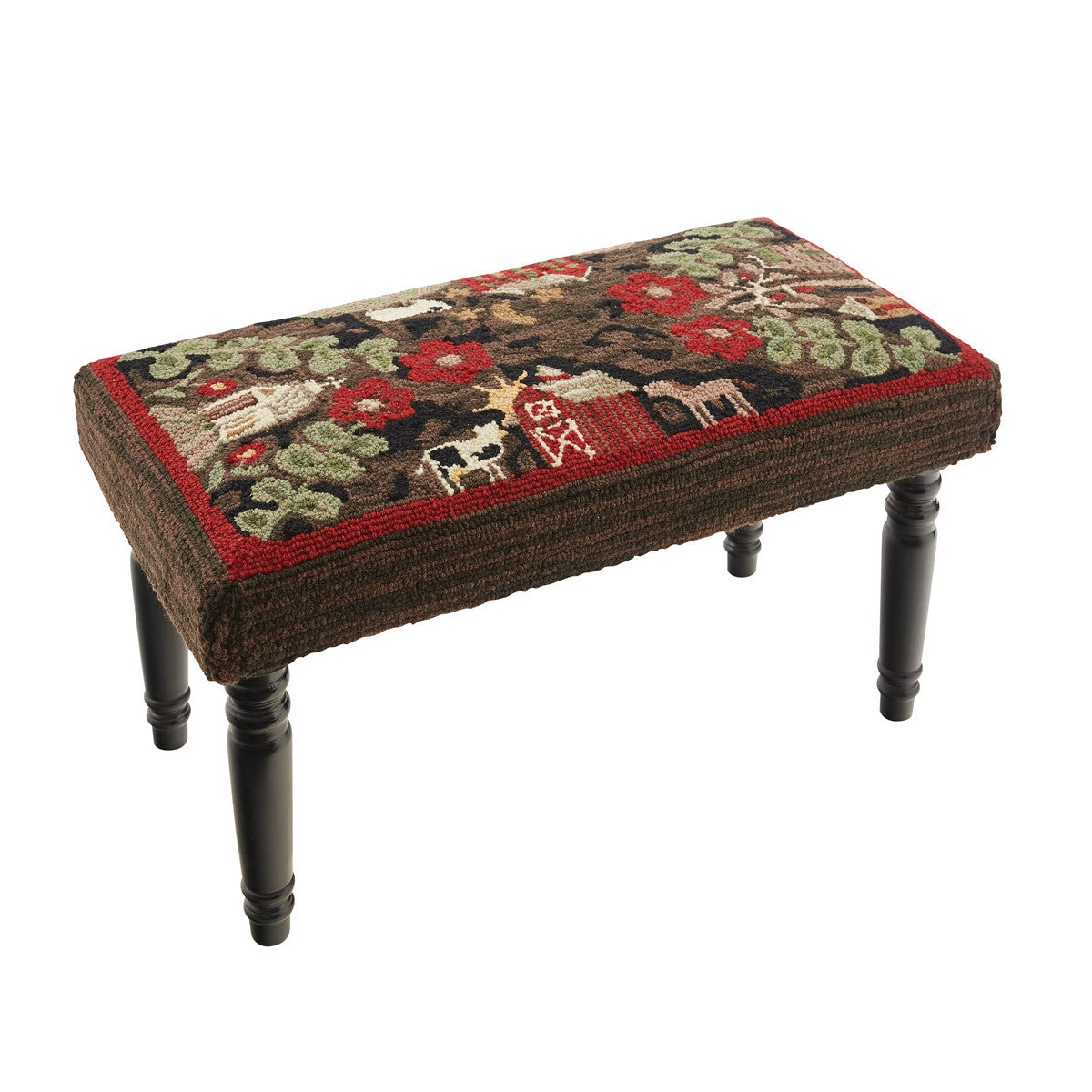
Cushioned and hand-hooked seats soften the silhouette and introduce pattern or color. Review fabric care, cushion construction and the intended indoor or protected-area use.
One Piece, Many Possibilities
In an entryway, a bench creates a welcoming place to remove shoes or set down a bag. At the foot of a bed, it adds a useful surface and a visual bridge between the bed and the rest of the room.
Around the dining table, a bench can seat several people while keeping the arrangement relaxed. In a hallway, study or sunroom, it can turn an underused stretch of wall into a place to pause.
Smaller hooked benches work beautifully as decorative accent seating where a full-size bench would be too large. Substantial backed benches can anchor a foyer, mudroom or breakfast area and create a stronger sense of permanence.
Product pages identify the materials, dimensions, finish, assembly, delivery method, current availability, production time and whether the piece is eligible for return.
Differences in ironwork, patina, wood grain, live edges, yarn color, pattern placement, distressing and hand-applied finishes are part of the individual character of applicable designs.
Common Questions
Begin with the intended placement and use. Dining benches should coordinate with the table height and base placement. Entryway and bedroom benches should fit the available wall and walkway. Accent benches may be smaller and chosen as much for pattern or texture as for seating.
Compare the occupied seat height with the underside of the tabletop, apron or lowest structural obstruction. A comfortable starting point is usually about 10–13 inches of clearance, but the exact table and bench dimensions should guide the decision.
Capacity depends on the usable seat width, arms, cushions and the amount of space each person needs. For dining, also consider the available table edge and the position of legs, trestles or pedestals.
Backless benches feel lighter, can often tuck beneath a table and work from either side. A backed bench offers more support and presence but requires additional depth and may need a wall or carefully planned placement.
Yes. A bench on one side with chairs on the remaining sides can create a relaxed, collected arrangement. Repeat a material, finish, upholstery color or visual weight so the pieces feel related.
Only use a bench outdoors when the individual product page identifies it as suitable for outdoor, garden, porch or covered-area use. Indoor wood, upholstery and some metal finishes are not intended for ongoing exposure to weather.
Assembly and delivery vary by product. Smaller benches may ship by parcel carrier, while large, heavy or fully assembled benches may arrive by curbside truck or blanket-wrap delivery. Review the product page and measure the complete delivery path before ordering.
Availability and return eligibility vary. Some pieces are stocked, some are handcrafted or finished after purchase and others may have limited availability. Review the current production, cancellation and return information on the individual listing.
Continue Shopping